Your supplier just sent four prices for the same 1000-litre IBC tank New, Refurbished, REBO, Antistatic – and they’re not close.
Before you pick the cheapest line item, it helps to know what you’re actually buying, because the wrong choice on this one packaging decision can cost you a rejected export shipment, a contaminated batch, or a tank that fails mid-transport.
For plants in chemical, pharmaceutical, agrochemical, food processing and water treatment, the IBC tank isn’t just a container. It’s the thing standing between your product and a compliance audit. So here’s a straight comparison of what New, Refurbished, REBO and Antistatic actually mean, and which one fits which job.
First, What Is an IBC Tank Actually Made Of?
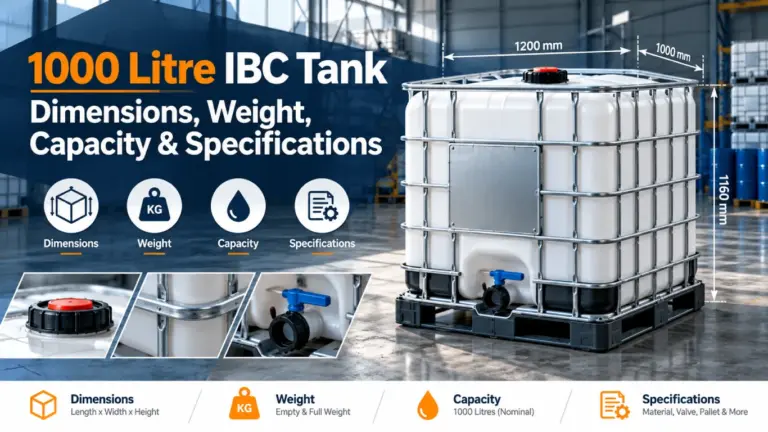
An IBC (Intermediate Bulk Container) tank is a plastic bottle – usually HDPE sitting inside a galvanized steel cage, mounted on a pallet. That basic structure is common to every type. What changes between New, Refurbished, REBO and Antistatic is which part of that structure is fresh and which part is reused.
This matters because the bottle is the part that actually touches your product. The cage mostly just holds the shape and takes the physical load during handling and transport.
The Four Types, Compared Honestly
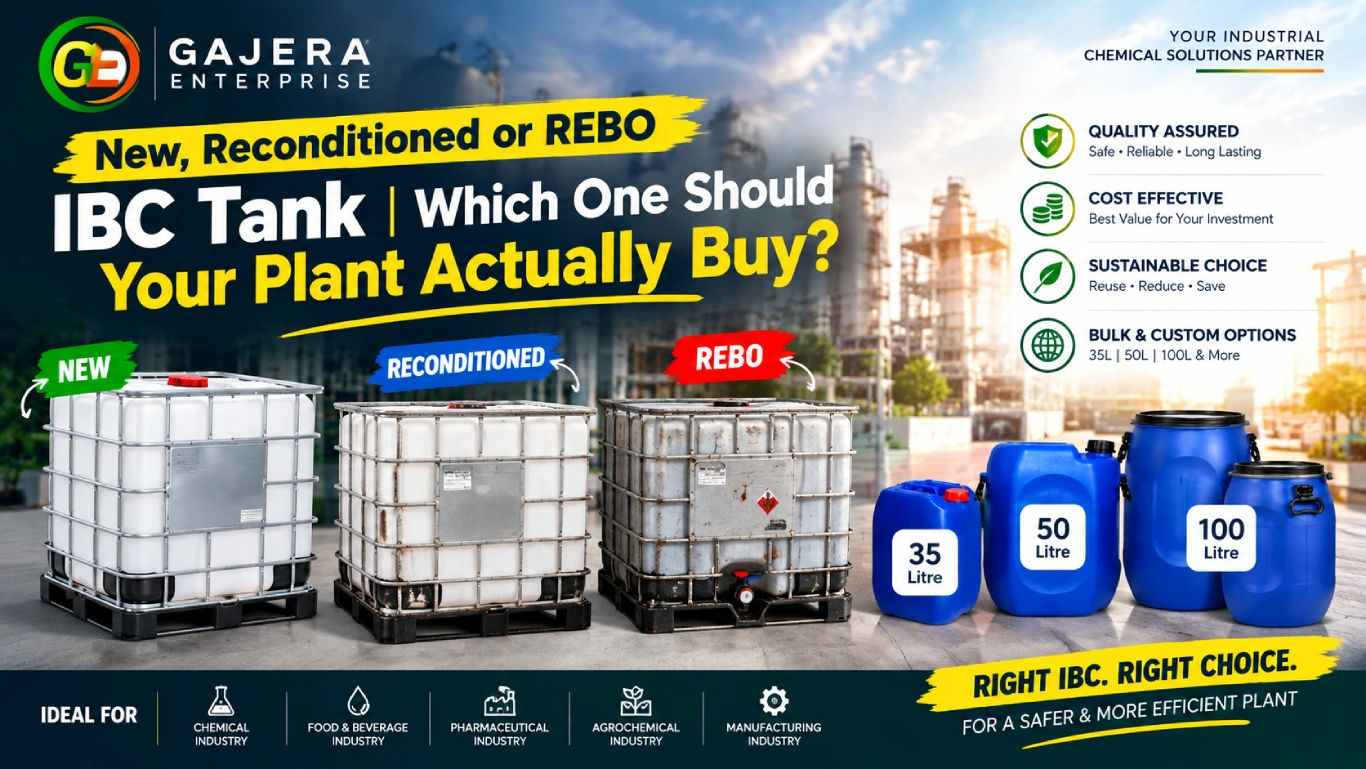
| Type | Inner Bottle | Cage & Pallet | Best Suited For | Relative Cost |
|---|---|---|---|---|
| New | Fresh, unused | Fresh, unused | Pharma, food-grade, export orders needing full traceability | Highest |
| Refurbished | Cleaned & re-tested original bottle | Cleaned, inspected, repaired if needed | Non-hazardous chemicals, industrial liquids, repeat industrial use | Lowest |
| REBO (Rebottled) | Fresh, new bottle | Reconditioned cage & pallet | Chemicals and agrochem needing new-plastic purity at a lower cost than fully New | Mid-range |
| Antistatic | New or REBO bottle with conductive additive | Fresh or reconditioned | Flammable liquids, solvents, anything with static-discharge risk | Depends on base type |
A quick way to think about it: Refurbished saves the most money but carries the most uncertainty about prior contents. REBO gives you new-plastic cleanliness on a lower budget than a fully New unit. Antistatic isn’t really a separate condition – it’s a safety feature layered on top of New or REBO, and it’s non-negotiable if you’re handling solvent-based or flammable material.
When Each Type Actually Makes Sense
Choose New when:
- The end product is food-grade, pharmaceutical, or otherwise needs zero contamination risk
- You’re exporting and the buyer’s compliance team will ask for full documentation and first-use history
- The batch value is high enough that a tank failure would cost far more than the price difference
Choose Refurbished when:
- You’re storing non-hazardous industrial liquids, lubricants, or general chemicals
- It’s for internal plant use, not a food-contact or pharma application
- You need volume at the lowest possible per-unit cost
Choose REBO when:
- You want the cleanliness of a new bottle without paying full New pricing
- The application is chemical or agrochemical, where new-plastic purity matters but a reconditioned cage is acceptable
- You’re placing repeat bulk orders and want a predictable cost-to-quality balance
Choose Antistatic when:
- You’re packing flammable liquids, solvents, or anything with an explosion risk from static build-up
- Your safety officer or plant compliance policy specifically calls for conductive packaging
- You’re in a regulated handling environment where this isn’t optional
Why UN Certification Isn’t Just a Sticker
If any part of your product is classified as a dangerous good for road, rail or sea transport, the tank needs to carry a valid UN mark. This certification confirms the container has passed drop, stack and pressure testing under the UN Recommendations on the Transport of Dangerous Goods – without it, the shipment can be held at customs or refused outright by the carrier.
For plants exporting out of Gujarat’s industrial belt, this is worth confirming before the order is placed, not after the container reaches the port. Ask your supplier for the UN certificate specific to the tank type and grade you’re buying, especially on Refurbished units where the original bottle’s certification history needs to carry forward correctly.
The Quality-Check Question Nobody Asks Until Something Goes Wrong
Whichever type you choose, ask your supplier one direct question what does the pre-dispatch inspection actually check ?
A serious reconditioner tests for :
- Leak integrity on the bottle after cleaning
- Cage weld and galvanising condition
- Valve seal performance
- Chemical compatibility with your specific product, not just “general industrial use”
If a supplier can’t answer this in specifics, treat that as your real red flag – more than the price difference between tank types.
A Simple Decision Framework
- Is it food-grade or pharma-grade? → Go New.
- Is it flammable or solvent-based? → Add Antistatic, regardless of base type.
- Is budget the primary constraint and the liquid non-hazardous? → Refurbished works.
- Do you want new-plastic cleanliness without full New pricing? → REBO is the middle path.
- Is this an export order? → Confirm UN certification in writing before payment, not after.
Sourcing From a Single Vendor Simplifies This More Than You’d Think
Plants that buy New, Refurbished and REBO tanks from three different vendors often end up with three different documentation formats, three quality standards, and three people to chase when something’s wrong with an order.
Consolidating packaging supply tanks, drums, carboys with one reconditioner who handles all four types under one quality process removes that friction, and it’s usually where procurement teams land once they’ve been through a few mixed-vendor cycles.
Explore IBC Tank, Drum & Carboy Options →
FAQ’s
Is a Refurbished IBC tank safe for chemical storage?
Yes, for most non-food, non-pharma chemical applications provided the supplier can confirm the prior contents and the tank has passed a proper cleaning and leak-test cycle. It is not recommended for food-grade or potable-water use.
What does REBO mean on an IBC tank quote?
REBO stands for “rebottled” – a fresh inner HDPE bottle fitted onto a reconditioned cage and pallet. It gives new-plastic cleanliness at a lower cost than a fully new unit.
Do I need an Antistatic IBC tank for all chemicals?
No – only for flammable liquids, solvents, or products with a static-discharge risk. Your safety data sheet (SDS) for the product will usually specify if antistatic packaging is required.
Can a Refurbished or REBO tank still carry UN certification for export?
Yes, provided the reconditioning process is documented and the certification carries forward correctly for the tank type and grade. Always ask the supplier for the specific UN Certificate before shipment.
How do I know if my supplier’s quality check is actually thorough?
Ask what specific tests are run before dispatch leak integrity, cage condition, valve seal, and chemical compatibility. A vague answer here matters more than the price quoted.
Is there a minimum order quantity for bulk IBC tank supply?
This varies by supplier and tank type. Most industrial reconditioners work on pallet, container, or ton basis for bulk and export orders, with sample dispatch available before full-scale orders.
Ready to Order?
Whether it’s New, Refurbished, REBO or Antistatic – get a quote matched to your product and compliance need.
📞 Call +91 93164 26492 | 💬 WhatsApp for Instant Quote
Need Help Choosing the Right Industrial Solution?
Tell us about your application, required quantity and technical requirements. Our team can help you explore suitable product options.